Time to Debrand?
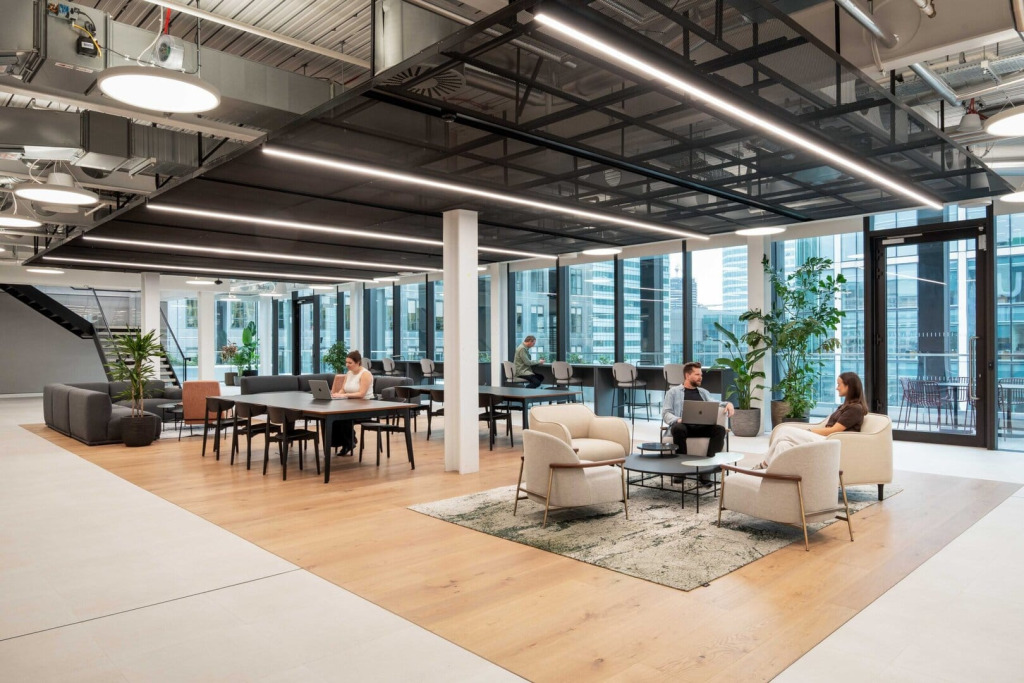
Georgia Nogas, Head of Concept Design at AIS, explores how brands can cut through the noise and create a point of difference in the workplace, by keeping trademark branding at arm’s length.
We live in a world in which brand content and advertisements meet us at every turn, on passing buses, in social feeds, and across every news site we scan. With constant stimuli and pushy brand messaging, it’s easy to feel overwhelmed. So, how do you cut through the noise and make a point of difference in the workplace with trademark branding kept at arm’s length?
The key is creating memorable spaces rooted in user-centric design and clear expressions of a company’s core values. Authenticity begins with truly understanding clients – their ambitions, their identity, and the experience they want to deliver for everyone who interacts with the space, from team members to visitors and future talent.
Only with complete clarity on those core values can we translate them meaningfully and effectively into the physical environment.
This discovery process is itself incredibly revealing. For a brand to be able to communicate both quietly and confidently, those values must run through every aspect of its operations and ring true both internally and externally. It’s vital to include a range of stakeholders in the process, particularly those who have been invested in developing the brand to date so that any physical manifestation rings true with lived experience.
Once you have absolute clarity on what the brand wants to communicate you can begin to imagine how this plays out in practice. Let’s start by considering the journey into a workplace. Most visitors will enter through a communal entrance before being signposted to your office. Logic dictates that they are already likely to know where they’re headed, but at the moment they cross your threshold, their experience truly begins.
“Once you have absolute clarity on what the brand wants to communicate you can begin to imagine how this plays out in practice”
Georgia Nogas
Head of Concept Design, AIS
For a company at the forefront of digital innovation, that might mean a personalised welcome message signposting them to the best place for their meeting, or a QR code that can bring up the exact coffee order from their last visit. What makes it memorable isn’t the technology – it’s the seamless, personal touch.
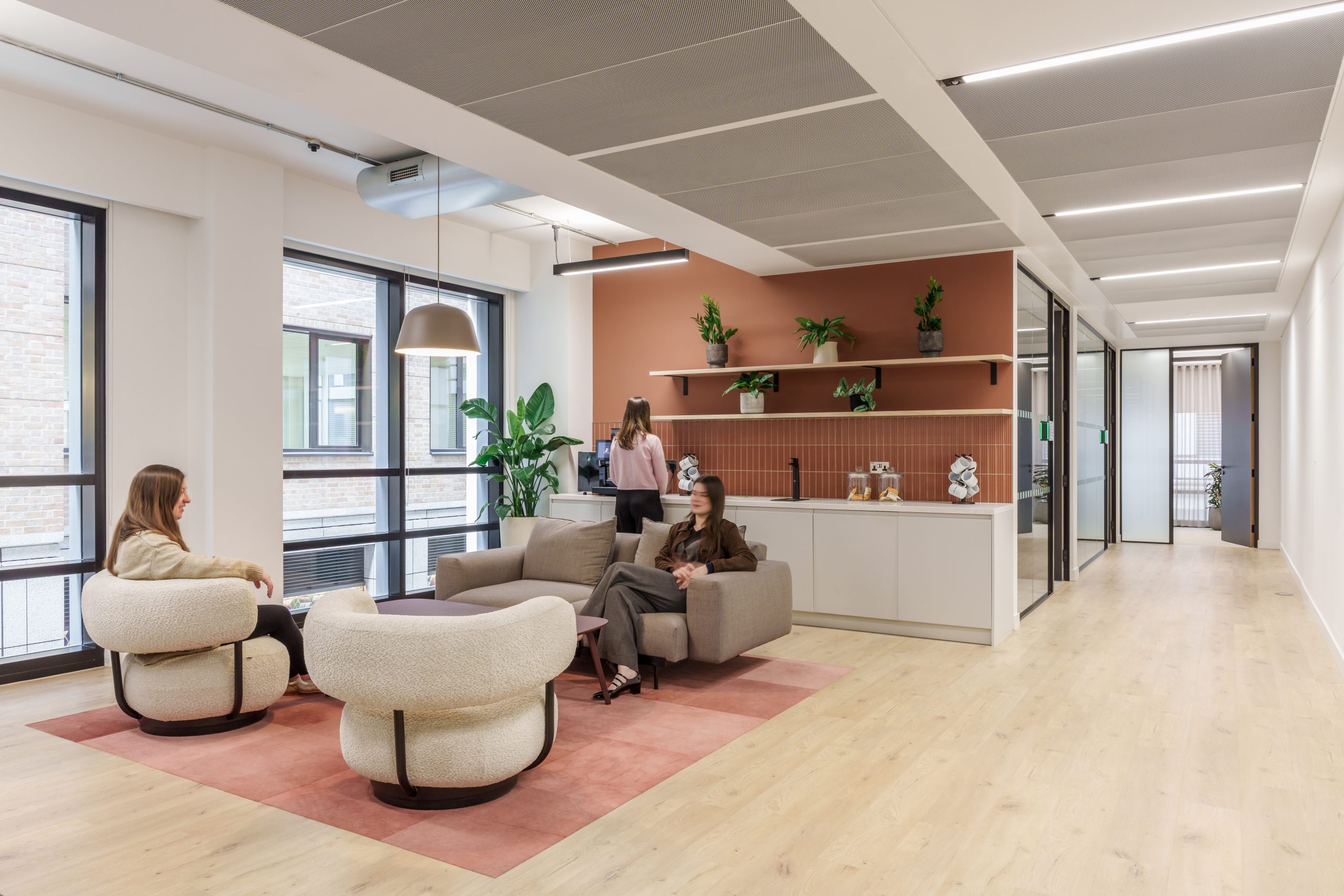
For businesses built around exceptional client service, the expression might be different. If someone is coming to your office for a series of meetings, their working day is likely to be made easier if they can punctuate those meetings by catching up on other calls and emails in a separate space. Design considerations here could include incorporating a semi-co-working zone so that day-visitors have a comfortable lounge to work from.
This also gives your team natural, informal opportunities to connect – over a coffee, a quick chat, or a moment of support, without the structure of a scheduled meeting. Providing everything from charging points to refreshments and phone booths signals your values implicitly. The focus shifts from showing your brand to helping people feel it. A sense of trust of built through the simplicity of human connection.
Helping people feel your brand through a physical workplace is also crucial from a recruitment and retention perspective. New talent keen to join an organisation should be given a similar experience to clients and guests. Your workplace offers an opportunity to communicate your values from the interview stage. There are a whole host of reasons why people take jobs and move jobs, but anything that helps tip the balance in your favour in a competitive market is worth considering.
Let’s say you are looking for graduates to enter your business, having a space which looks fantastic is important. However, if you’re able to showcase key collaboration areas during their visit, the implicit message is that their voice counts. Showing, rather than telling, is always going to be more impactful.
“Helping people feel your brand through a physical workplace is also crucial from a recruitment and retention perspective”
Georgia Nogas
Head of Concept Design, AIS
The same theory applies to existing talent and keeping them happy and engaged in their work. The workplace must support your core values. If collaboration is key, we need to provide spaces to facilitate this; if keeping pace with technology is what drives your business then the integration of world class AV facilities needs to be seamless to provide a truly connected experience.
It’s not to say that this shift towards debranding or a quieter expression of branding is without challenges. One of the greatest hurdles is ensuring that everyone in the client team is taken on the right journey. Your brand and marketing team will be rightfully annoyed if they’re presented with a finished space that deviates from colour specifications in the brand guidelines.
Of course, they’re going to question why the shade of blue being used isn’t the exact replica of the brand guidelines. But we must remember that 99.9% of the time brand guidelines are created for digital interaction or print, people don’t interact with colour in the same way in a physical space. The question isn’t about matching a precise shade – it’s about using colour to reinforce your values and evoke the right emotional response. A digital pioneer, for instance, may lean into bold contrasts, while a brand championing quiet luxury might express itself through deeper, more refined tones.
The refinement of the branding scheme across the office creates a sense of calm confidence and timelessness. Should a digital logo or branding scheme evolve over a company’s lifespan – the built office space will still accurately reflect the corporate ethos and ambition.
Ultimately, debranding in the physical workplace isn’t about stripping personality away- it’s about distilling it to its most human form. When we move beyond visual shorthand and instead design for emotion, experience and intuition, we give people a genuine sense of what a brand stands for. The opportunity for both designers and organisations lies in this subtlety: creating environments that quietly communicate with confidence and purpose. In a world saturated with noise, it’s the spaces that speak softly – yet with intention – that leave the most lasting impression.
“Debranding in the physical workplace isn’t about stripping personality away – it’s about distilling it to its most human form”
Georgia Nogas
Head of Concept Design, AIS
Read the full article, featured in Works Magazine here.

Get in touch
Contact usRelated insights
The Space Between
Creating Collaborative Spaces for Research and Innovation
Workplace Design Trends Shaping the Middle East
Sustainable Refurbishment for Local Authority Buildings
How to minimise disruption when refurbishing a school during term time
AIS is entering a new chapter
Bringing Clarity to Complex Education Projects