- 2nd April 2026
- 3 mins min read
5 Design Ideas for Small Offices
An office doesn’t need to be big to deliver impact. In today’s world businesses are faced with pressures and uncertainty that requires every decision to deliver.
Whether you’re a small business with a modest floorplate, or an emerging business looking for efficiency, your office can be designed to support your business ambitions, no matter the size.
We know that a well-designed workplace helps to boost employee engagement, optimise operational productivity and nurture company culture. By applying a series of space strategies and design techniques to a small office space, we can deliver a working environment that welcomes people inside, and supports their work day.
This article uncovers actionable ideas and insights to apply to your office design. We’ll consider how to maximise space efficiency, utilise innovative storage solutions and provide your people zones to suit different work modes, all while creating a warm and welcome working environment.
1. Smart layouts that maximise function
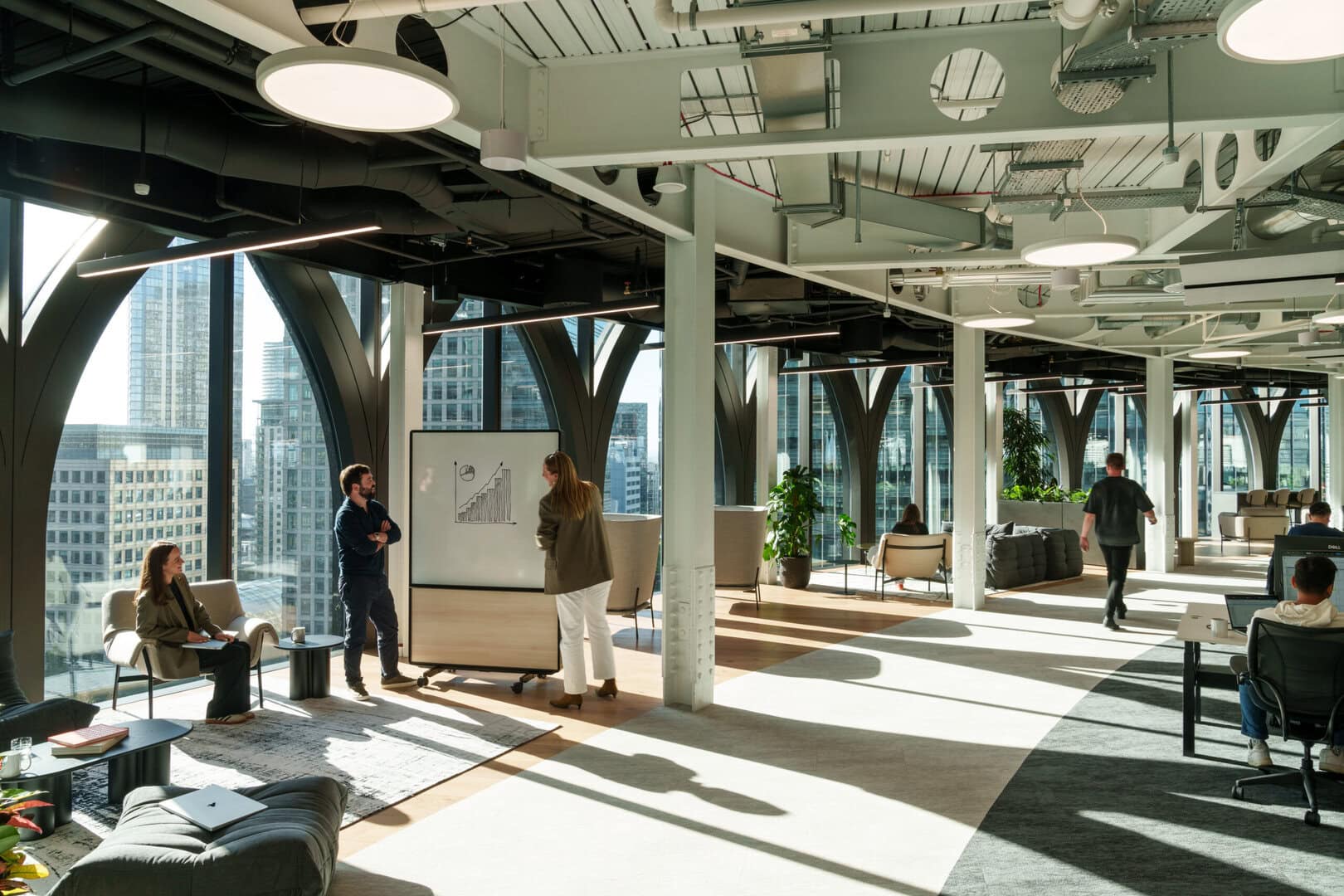
Maximising the potential of a small office starts with a consideration for how the floorplan will be configured. Using an open-plan layout helps to create a sense of space, light, and flexibility, making the space feel larger and more connected. However, it’s important to remember that a workplace needs to satisfy a range of work modes that require different noise and energy levels. It’s important to create designated zones to support different activities such as quiet areas for focused work, meeting rooms for collaboration, and breakout spaces for informal discussions to help balance productivity with comfort. These spaces can be gently zoned with curtains, acoustic partitions and modular furniture, protecting the role of each.
Consider how behaviour can support small office design. Providing designated hot-desking areas encourages your people to touch down in between meetings and allows multiple employees to share workstations efficiently, reducing unused space. Not only that, but rotating around different desk clusters helps colleagues to connect with each other, supporting cross-pollenation between teams. To maintain ease of movement within a tight floorplan, clear walkways are essential and help to avoid a cramped or cluttered feel, improving both safety and flow. Together, these elements ensure a small office is functional, flexible, and supportive of different ways of working.
2. Use visual elements to create a sense of space
Creating a sense of space in a small office relies heavily on thoughtful visual design choices that enhance light, openness, and clarity. Mirrors and reflective surfaces are a simple yet powerful tool, as they bounce natural and artificial light around the room, making the space feel brighter and larger.
Layered lighting that combines ambient, task, and accent lighting adds depth and flexibility, ensuring the office feels well-lit without harshness. Soft or pastel colour palettes further contribute by reflecting light and creating a calm, open atmosphere, rather than making the space feel small or enclosed.
Glass partitions are an effective alternative to solid walls, allowing light to flow freely while still providing separation and privacy where needed. Equally important is keeping sightlines clear, as unobstructed views make the office feel more expansive and organised. Try clear desk policies, communal lockers or effective waste and recycling systems to support efficient design. Together, these visual elements work cohesively to transform a compact office into a space that feels open, functional, and inviting.
3. Install budget-friendly, multi–purpose furniture
Designing within a small office setting is made far more effective with multi-purpose, flexible furniture that adapts to changing needs throughout the day, and helps to plan for the future. Modular furniture is a key element, as its versatility allows for multiple configurations to accommodate different sized meetings or activities, helping you make the most of limited space while reducing the need to purchase additional pieces.
Furniture solutions such as fold-away tables and stackable chairs are equally valuable, as they can be easily stored when not in use, freeing up floor space and allowing the office to shift between functions such as meetings, collaboration, focused work, or even social events. Wheeled desks and tables further enhance this flexibility by introducing mobility, making it simple to reconfigure the layout as requirements change throughout the day or week. Together, these budget-friendly solutions not only save money but also support a more dynamic, efficient workspace, ensuring a small office remains practical, uncluttered, and responsive to the needs of your people.
4. Get creative with your storage solutions
Incorporating creative storage solutions is essential when exploring office design ideas for small office spaces, as it helps maintain functionality without sacrificing valuable real estate. Vertical storage is particularly effective. Make use of wall height for shelving or use cabinets to keep items organised while freeing up the ground space. Furniture that doubles as storage, such as desks with built-in drawers or benches with hidden compartments, adds practicality without increasing clutter or cost.
Wall-mounted desks or shelving units further enhance efficiency by keeping surfaces off the floor, creating a cleaner, more open feel while still providing essential workspace and storage. Together, these solutions maximise every inch of the floor area, supporting a tidy, efficient, and visually spacious environment that allows a small office to operate smoothly and effectively.
5. Add ambient elements that lift the mood
Designing for the senses is a powerful way to elevate the workplace experience. Incorporating ambient elements in small office spaces, especially, delivers immediate impact and helps to transform them into welcoming, energising environments that support both employee wellbeing and colleague collaboration.
Introducing plants and other elements such as moss walls or natural materials is a simple yet effective strategy, as they are proven to improve air quality and assist in promoting an environment that helps employees feel more at ease. Making the most of natural light is equally important. By arranging layouts to maximise sunlight, such as placing desks next to windows, makes the space feel larger, brighter, and more open, while also helping to enhance mood and alertness throughout the day.
Sensory details such as accents of colour, background sound, or branded scents further enrich and personalise the environment. These design ideas for small office spaces work together to create an environment that feels consistent, comfortable and inviting. The result is a workplace that encourages interaction, boosts satisfaction, and ultimately increases the office’s capacity to operate as a shared, communal hub across the work day.
Examples of successful small office transformations
When trailblazers Cyted required a new office space in Cambridge, the digital diagnostics firm collaborated with AIS to create a progressive HQ within a space that required innovation and optimisation.
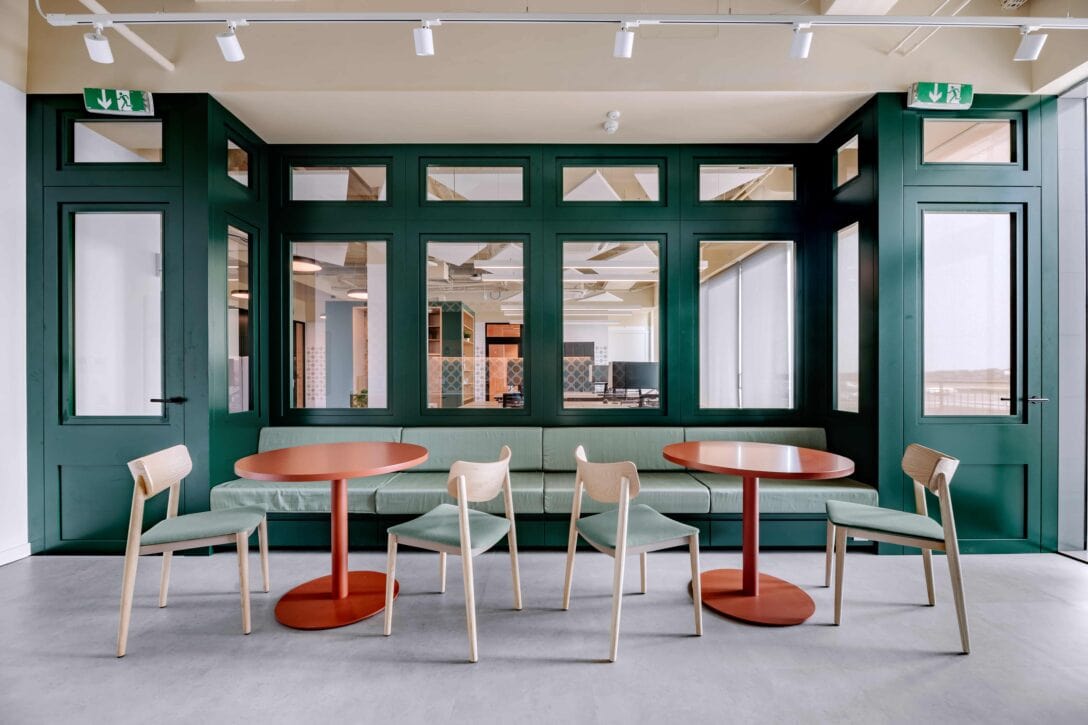
Through strategic design, the layout was reimagined to improve flow and usability, moving from a more constrained setup to a balanced environment combining flexible spaces with clearly defined zones. This included areas for focused individual work, collaborative discussions, and shared team interaction, ensuring the space could support different working styles within a limited footprint. Design enhancements also focused on quality-of-life improvements, such as a dedicated canteen area, creating a more welcoming atmosphere and improving how teams interact within the space.
The outcome is a revitalised contemporary Life Sciences workplace that has connected Cyted with their colleagues and company mission.
Summary
Thoughtful small office design and small office interior design can transform even the most compact spaces into efficient, flexible, and welcoming environments. Combining smart layouts with designated zones and wellbeing-focused features unlocks the potential of even the most modest spaces. If you’d like to know more about how to maximise the potential of your workspace, contact us to hear more.
Research and Insights
6 Office Design Ideas to Boost Wellbeing in 2026
Workplace Matters: Why the multi-use workplace matters more than ever