

- 11th June 2025
- min read
Why Revolut chose the design and build route for their London office
Why did Revolut, a high-growth global fintech company, opt for the design & build (D&B) model over the traditional route? The answer lies in a perfect storm of practical necessity and strategic vision, an increasingly common scenario in today's fast-moving business landscape.
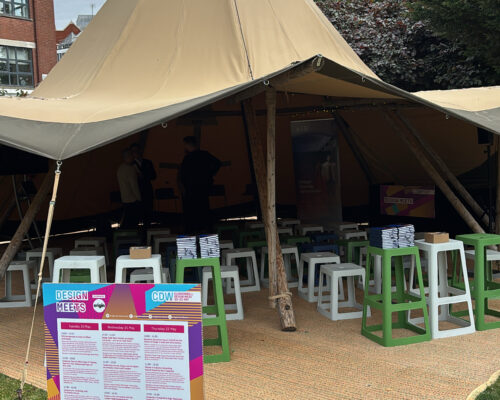
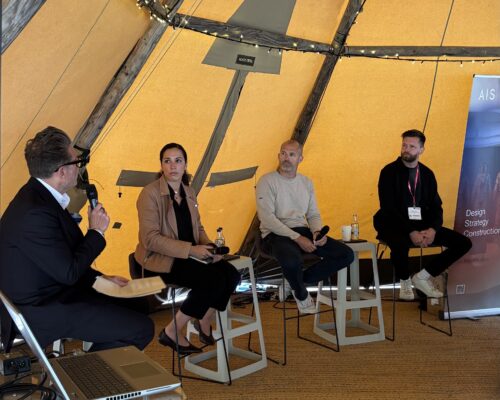
At Clerkenwell Design Week, AIS had the pleasure of hosting a panel discussion focused on Revolut’s new London office, a project that not only challenged convention but redefined what workplace design can achieve when innovation, efficiency, and identity align.
The key question we explored was: Why did Revolut, a high-growth global fintech company, opt for the design & build (D&B) model over the traditional route? The answer lies in a perfect storm of practical necessity and strategic vision, an increasingly common scenario in today’s fast-moving business landscape.
The business case for design & build
Traditionally, office projects have followed a linear process: appointing an architect and design team, then tendering for a contractor to bring those ideas to life. While this approach can be appropriate for certain complex or bespoke developments, it often lacks the agility today’s businesses require.
For Revolut, speed and resource limitations were pivotal. As a company scaling globally at an extraordinary pace, with over 35 million customers and operations in more than 35 countries, time was quite literally money. Internal teams were fully stretched, and Revolut needed a partner that could shoulder the end-to-end responsibility, reduce risk, and compress timelines without compromising on quality or brand integrity.
The role of data-driven design
What truly set our approach apart, Kevin Oles, Revolut, explained during the panel, was the strategic thinking and data underpinning it.
Our design was not purely aesthetic; it was grounded in extensive workplace research and user engagement. From productivity patterns to spatial analytics, every element was supported by data. We understood that for Revolut, the workplace wasn’t just a utility, it was an extension of their brand as a lifestyle platform and a cultural beacon for recruitment and retention.
Recent studies support this alignment between workplace design and business strategy. According to the Leesman Index, only 59% of employees globally believe their workplace enables them to work productively. In contrast, high-performing workplaces, those designed with user needs at their core, see satisfaction rates rise to over 85%. Revolut, recognising the strategic value of the workplace, was committed to being in the latter category.
Delivering brand through the built environment
Revolut’s office needed to embody a brand that disrupts norms and drives digital lifestyles. That meant rethinking the physical environment not just as an office, but as an experience, tailored to inspire innovation, attract top talent, and create a consistent global brand identity.
AIS brought this vision to life by integrating Revolut’s identity into every square metre of space. From the choice of materials to spatial flow, each decision was deliberate. Our team used insights from brand workshops, employee feedback, and behavioural studies to create an immersive workplace that resonates with both Revolut’s ethos and its people.
Why the design & build model is gaining ground
The D&B approach allowed Revolut to streamline project delivery. By unifying the design and construction process under one roof, we eliminated handover friction, accelerated timelines, and provided a single point of accountability.
According to the Royal Institution of Chartered Surveyors (RICS), D&B projects can reduce overall delivery time by 20–30% compared to traditional procurement models. With the rise of hybrid working and the evolving role of the office, more companies are demanding this kind of responsiveness and flexibility.
What’s more, by using D&B, clients can make real-time decisions as the project evolves. That agility was vital for Revolut, where innovation and change are part of the daily rhythm.
Revolut’s decision to pursue a D&B route wasn’t simply about faster timelines or easier project management. It was a deliberate move to ensure that every element of their workplace – from strategy to execution – was aligned, agile, and brand-enhancing.
At AIS, we believe the future of workplace design lies in this fusion of creativity, insight, and delivery. As businesses continue to navigate new ways of working, those who embrace integrated models like D&B will be best positioned to turn their office environments into competitive advantages.