1. Wellbeing-First Workplace Design
Workplace wellbeing is no longer a “nice to have”, it is central to talent attraction and retention. Staff wellbeing ideas in 2026 focus on mental health, inclusivity and psychological safety.
This includes:
- Dedicated wellness rooms
- Neurodiverse-friendly zones
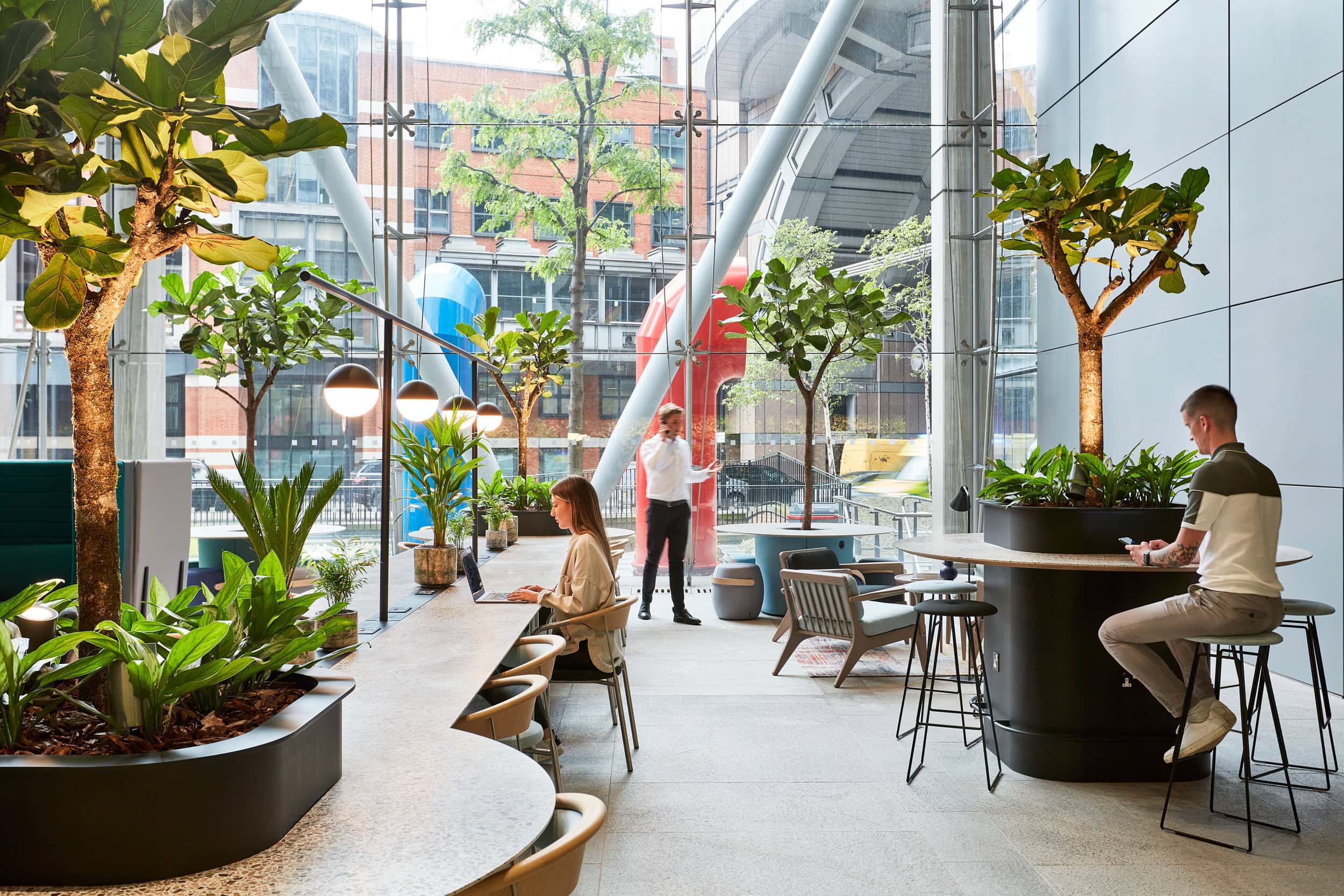
- Biophilic design integration
- Acoustic zoning for focus
Studies show biophilic environments can improve cognitive performance by up to 15%, while improved acoustics reduce stress and fatigue in open-plan environments.
Designing for well being in the workplace ideas directly impacts engagement, productivity and long-term retention.
2. AI-Integrated and Smart Workspaces
AI is transforming how offices operate. Smart environmental systems can reduce energy usage by up to 20%, while occupancy data enables more efficient layouts.In 2026, designs for office space must incorporate:
- AI-driven occupancy tracking
- Smart lighting and climate control
- Data-led space planning
- Seamless hybrid meeting technology
The future workplace must support both human creativity and technological advancement in equal measure.
3. Flexible and Adaptable Office Layouts
As the lines of work and life continue to blur, we will continue to see the erosion of distinct workplace interior styles.
Hybrid work has permanently reshaped expectations. Offices must now adapt quickly to shifting headcounts and workstyles.
Modern office ideas include:
- Modular furniture systems
- Movable walls
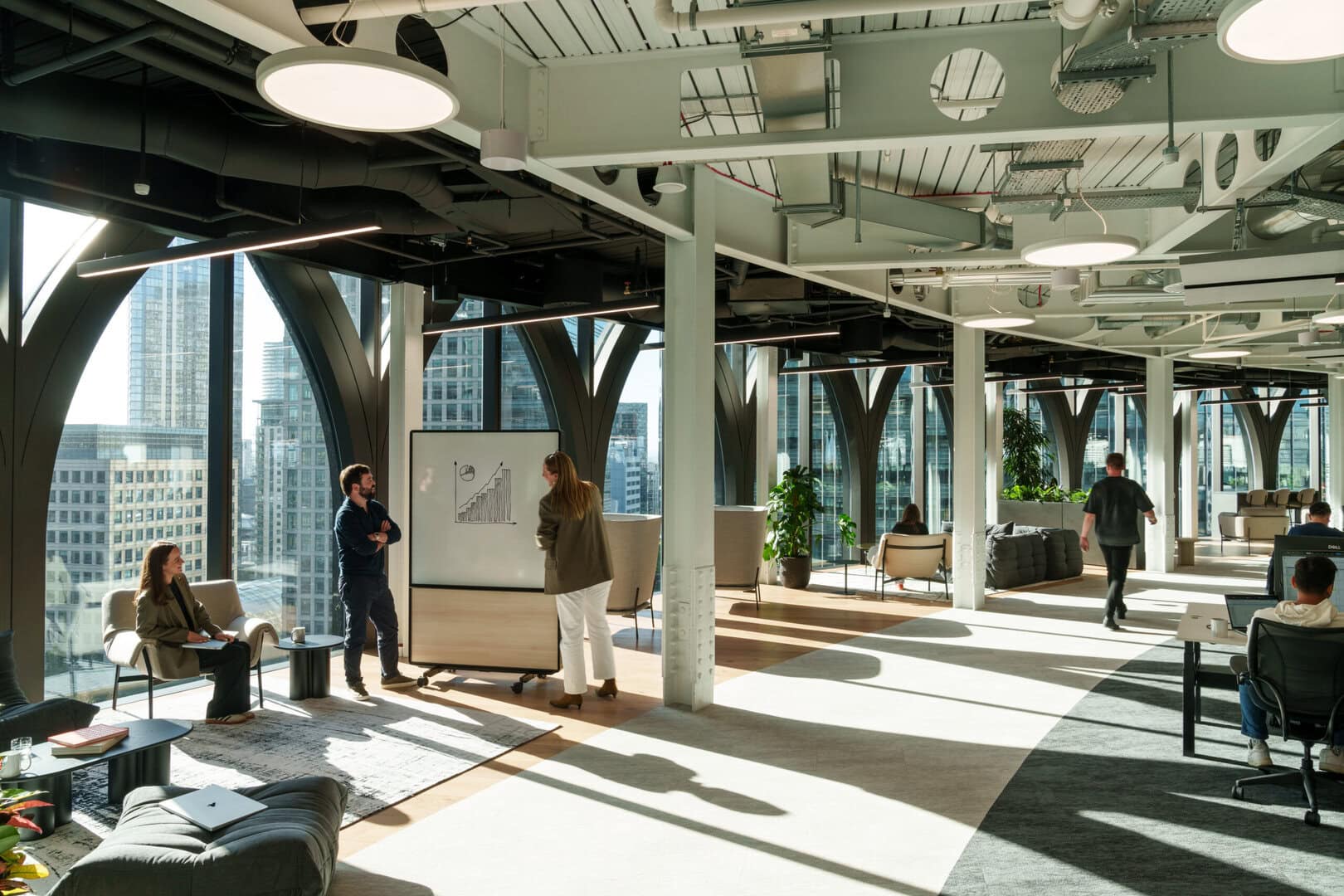
- Activity-based working zones
- Collaboration hubs alongside quiet retreat areas
Organisations reducing fixed desk allocations by 30–40% are reinvesting that space into collaboration and social areas, enhancing culture while improving space efficiency.
Flexibility is no longer optional, it is fundamental to the future design of office space.
4. Mental Health-Centered Design
The next phase of workplace evolution focuses specifically on mental health.Design considerations include:
- Access to natural light
- Calm, restorative breakout areas
- Multi-sensory spaces
- Reduced visual and acoustic overstimulation
UK data continues to show rising mental health-related absence, reinforcing the importance of thoughtful design interventions.
5. Sustainable and Circular Design Choices
Sustainability is now embedded within strategic workplace planning. In 2026, leading organisations prioritise:
- Circular material selection
- Reclaimed and low-carbon materials
- Modular furniture reuse
- Carbon-conscious fit-outs
Sustainable design of office space plays a measurable role in ESG targets and long-term operational efficiency.
6. Designing for Future Growth and Adaptability
Future-ready offices are built with long-term adaptability in mind.This includes:
- Scalable infrastructure
- Flexible power and data grids
- Scenario planning during early design phases
- Planning beyond short lease cycles
Early design decisions can reduce future re-fit costs by up to 30%, making adaptability both a strategic and financial priority.
Planning Your Workplace for 2026 and Beyond
Creating a future-ready workplace requires more than following trends. It demands strategic insight, technical expertise and a deep understanding of people.
At AIS, we partner with organisations globally to design workplaces that prioritise wellbeing, flexibility and long-term performance.
How you Can Boost Wellbeing With Office Design
The most impactful office ideas for 2026 focus on:
- Wellbeing-first design
- Smart AI integration
- Flexible layouts
- Mental health-centred spaces
- Sustainable materials
- Future-proof adaptability