How to minimise disruption when refurbishing a school during term time
In our latest article, Adam Douglas, Project Director at AIS, shares the key considerations for delivering refurbishment projects in live educational environments, from safeguarding and operational continuity to phased delivery strategies that keep schools running while creating spaces that support learning, wellbeing and future growth.
Schools are designed around people. They are places where pupils learn, teachers inspire and communities come together. When a building needs to be upgraded, expanded or modernised, protecting that experience becomes just as important as delivering the construction project itself.
A live environment construction project is any project carried out while a building remains fully operational and occupied. In the case of a school refurbishment, this means balancing construction activity with the daily realities of teaching, learning and student wellbeing. Unlike many commercial buildings, schools rarely have the option of temporarily closing their doors. Educational continuity must be maintained, making careful planning and stakeholder coordination critical from the very beginning.
At AIS, we’ve worked alongside schools and education providers to deliver projects in live educational environments, from classroom upgrades and staff facilities to wider estate improvements. Through this experience, we’ve learned that successful projects are built on clarity, communication and early planning long before work starts on site.
One of the most common challenges schools face is uncertainty around where to begin. Estate teams are often managing competing priorities, while major capital projects may only happen once every few years. Early engagement with delivery partners helps schools understand what is possible, establish realistic budgets and create a clear roadmap for delivery before deadlines begin to drive decision-making.
Schools are also among the most complex live environments in which to undertake construction works. Safeguarding measures, DBS requirements, controlled site access and strict behavioural standards all need to be carefully managed throughout the project. Construction teams must work around lessons, exams and student circulation, often scheduling noisy or high-risk activities outside teaching hours wherever possible.
Compliance requirements extend beyond construction regulations alone, incorporating school-specific safeguarding, operational and accessibility requirements. Clear communication is equally important, with regular coordination often required across senior leadership teams, governors, teachers, parents, estates teams and local authorities.
At AIS, we often approach education projects through a simple three-stage framework:
- Assess – Understand the building, stakeholders, operational requirements and project objectives.
- Develop – Align the strategy, design, budget and delivery programme.
- Deliver – Mobilise the project with clear control over quality, cost and operational continuity.

Delivering a school refurbishment in a live educational environment requires far more than standard construction planning. Every decision must balance safety, operational continuity and the day-to-day experience of pupils, teachers and support staff.
Schools are unique environments with fixed timetables, safeguarding responsibilities and limited opportunities to pause operations. Unlike many commercial buildings, lessons, exams and extracurricular activities must continue throughout the project, placing additional demands on planning and delivery.
Safeguarding is one of the most critical considerations. Construction areas must be fully separated from the wider school environment through secure hoarding, controlled access points and clearly defined circulation routes. Contractors are typically required to complete safeguarding inductions, DBS checks and strict sign-in procedures, while materials, tools and equipment must be securely managed at all times.
One of the key lessons from delivering projects within schools is that safeguarding and operational planning should be considered from the earliest stages of project development. Early engagement helps identify student movement patterns, exam periods, access requirements and other operational considerations before construction begins, reducing the risk of disruption later in the programme.
Minimising disruption is equally important. Construction activities often need to be carefully phased around lessons, examinations, break times and school events to reduce the impact of noise, dust, congestion and temporary service interruptions.
Compliance adds another layer of complexity. Projects must satisfy construction regulations while maintaining fire safety strategies, accessibility routes, evacuation procedures and asbestos management controls throughout the works.
Finally, successful projects rely on strong communication. Senior leadership teams, governors, estates teams, teachers, parents and local authorities all have a stake in the outcome. Maintaining clear communication throughout the project helps create confidence, support efficient decision-making and ensure everyone is working towards the same objectives.
At AIS, we often find that the most successful education projects are those where stakeholders are aligned early. When expectations, responsibilities and project goals are clearly understood from the outset, schools can move from uncertainty to clarity far more quickly, creating a more stable foundation for delivery.
Carrying out construction works in a live school environment will always involve complexity, but with the right planning, communication and delivery approach, disruption can be significantly reduced while maintaining a safe and effective learning environment.
The most successful projects begin long before construction starts. Early engagement with stakeholders helps schools and delivery partners identify potential challenges, from exam timetables and student circulation routes to safeguarding requirements and access restrictions. This creates the opportunity to build a realistic programme, align expectations and develop solutions before they become problems.
At AIS, we encourage schools to engage delivery partners as early as possible. Our experience shows that projects achieve better outcomes when schools, designers and contractors work together from the outset to establish budgets, identify risks and develop programmes that work around term dates, operational requirements and safeguarding obligations.
This approach forms the foundation of our Assess, Develop, Deliver framework, helping schools move from uncertainty to clarity while maintaining momentum throughout the project lifecycle.
A phased delivery strategy is often one of the most effective ways to minimise disruption. By breaking projects into manageable stages, schools can maintain operational continuity while construction progresses in carefully controlled areas. This approach also provides greater flexibility to respond to changing school requirements throughout the programme.
Effective safeguarding procedures are equally critical. Schools should work closely with contractors to establish clear protocols covering site segregation, controlled access points, DBS compliance, worker identification and secure storage of materials and equipment. Fire escape routes, emergency access arrangements and temporary safety measures should be reviewed regularly as the project evolves.
Strong communication underpins every successful project. Regular updates help keep senior leadership teams, estates teams, teachers, parents and governors informed of progress, upcoming activities and any changes to operational arrangements.
When communication, planning and delivery work in tandem, schools gain more than a successful construction project. They gain confidence that the learning environment, student experience and operational priorities remain protected throughout the process.
A successful school refurbishment is about far more than upgrading classrooms or improving facilities. When planned effectively, it creates a clear pathway from project inception to delivery, reducing uncertainty while protecting the day-to-day learning experience.
One of the most significant benefits is reduced risk. Clear safeguarding procedures, phased delivery strategies and controlled site operations help protect pupils, staff and contractors throughout the project. Careful planning also minimises disruption to teaching, learning and school operations by reducing noise, access restrictions and unexpected interruptions.
Effective planning provides greater budget and programme certainty. By identifying risks early, validating project assumptions and aligning stakeholders around shared objectives, schools can reduce the likelihood of costly surprises, delays and reactive decision-making.
At AIS, we often find that the most successful projects begin with a clear understanding of the project’s scope, constraints and objectives. Early assessment of costs, programme requirements, supply chain considerations and operational pressures allows schools to make informed decisions and move forward with confidence.
Strong communication is another key benefit. Keeping leadership teams, teachers, governors and parents informed throughout the project helps build trust and create a shared understanding of both the process and the long-term value of the investment.
Ultimately, a well-planned refurbishment creates more than a better building. It creates a better learning environment, with modern facilities, improved accessibility, greater energy efficiency and more flexible spaces that support evolving teaching methods and student needs.
The most successful education projects don’t simply solve today’s challenges. They create the conditions for future growth, ensuring schools have environments that can adapt, perform and continue supporting their communities for years to come.
No two schools are the same, and neither are their estates. As educational needs evolve, buildings must adapt to support new ways of teaching, learning and collaborating. This means school refurbishments can vary significantly in scale, complexity and delivery approach, particularly when works need to be carried out while the school remains operational.
Many projects focus on improving and modernising existing spaces. This can include refurbishing classrooms, libraries, IT suites, science laboratories, dining facilities, bathrooms and staff areas to create environments that better support both pupils and educators. Circulation spaces such as corridors, reception areas and staircases are also often upgraded to improve accessibility, safety and the day-to-day experience of building users.
At AIS, we often see schools looking beyond simply replacing finishes or upgrading facilities. Increasingly, education projects focus on creating spaces that better support learning outcomes, staff wellbeing and future flexibility, ensuring buildings can adapt as educational needs continue to evolve.
Some projects involve new-build facilities within an operational campus. These may include additional classroom blocks, specialist teaching spaces, SEN facilities, sports buildings or social and breakout areas designed to accommodate growing student populations and changing curriculum requirements.
Technical infrastructure upgrades are another common form of live environment project. Improvements to heating, ventilation, lighting, electrical systems, fire safety measures and accessibility features can significantly enhance building performance while reducing long-term maintenance and operational costs.
Case study:
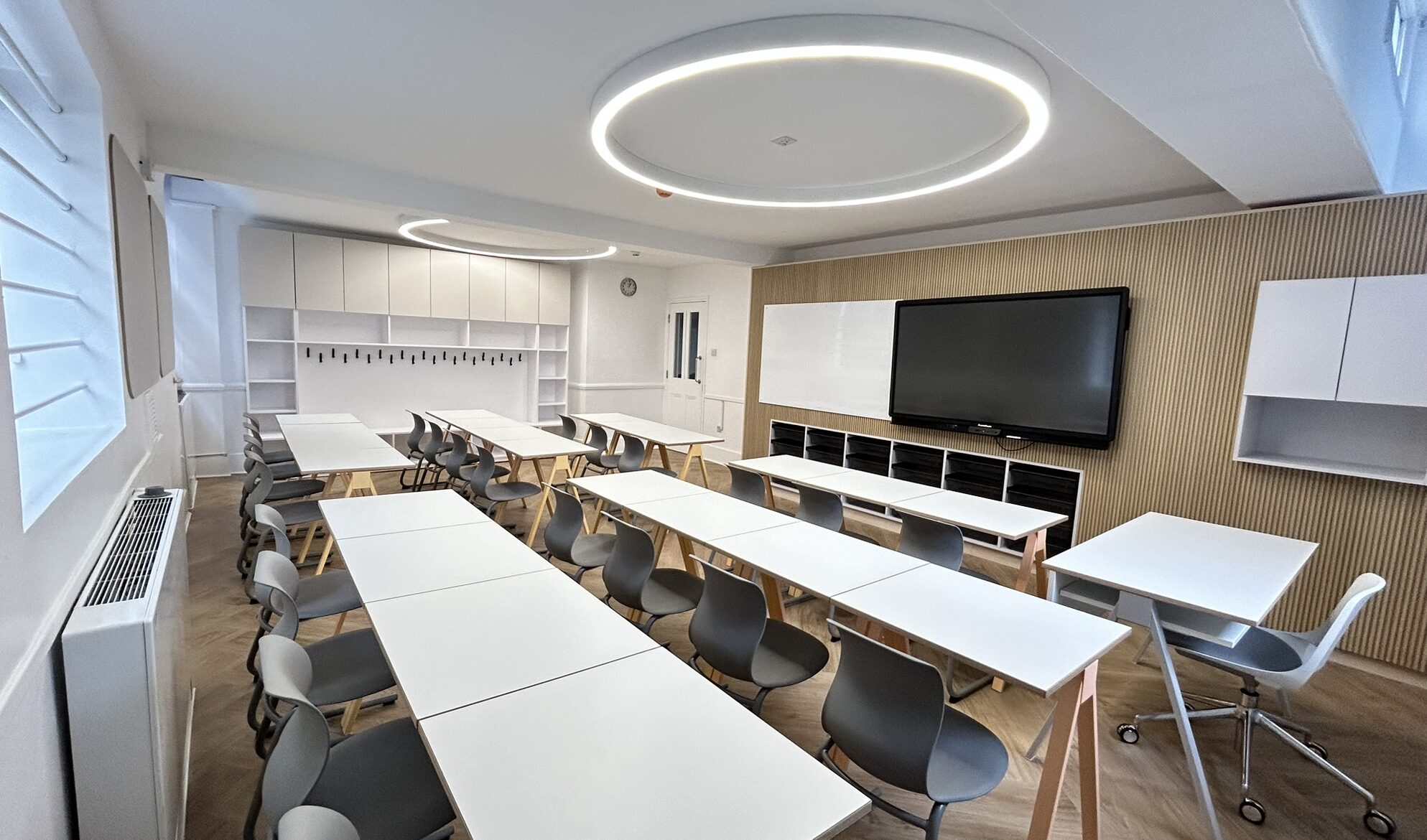
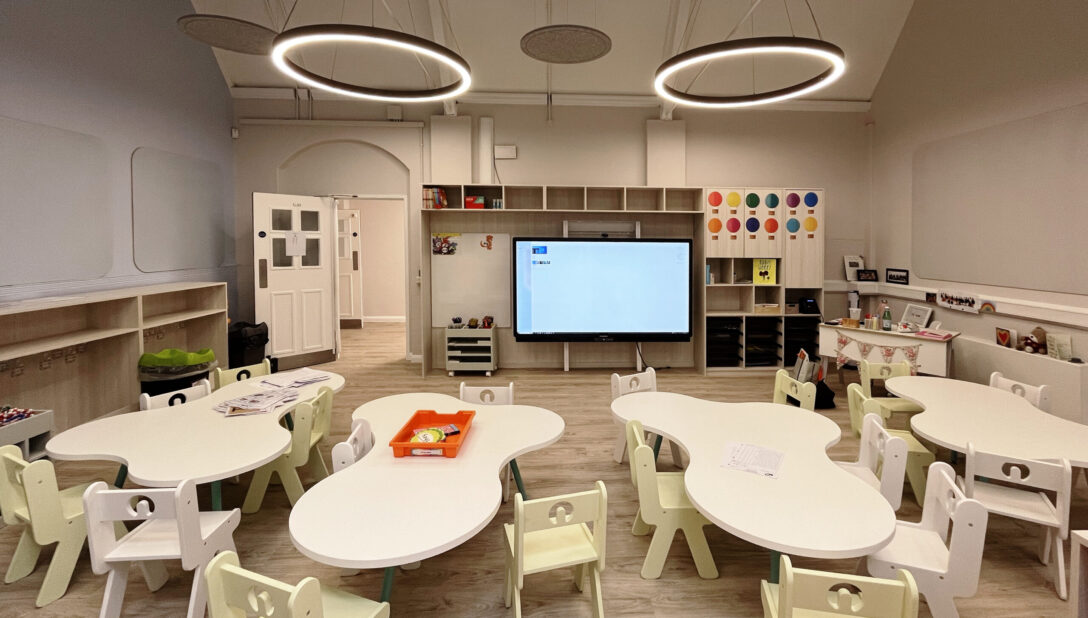
A good example is AIS’s work with Pembridge Hall School, part of the Inspired Education group. Working within a tightly managed programme, AIS delivered refurbishment works across four buildings, including 12 classroom upgrades, staff facilities, welfare improvements and external landscaping. The success of the project led to AIS supporting a further ten schools across the wider group, demonstrating the value of careful planning, open communication and a strong understanding of live educational environments.
View the full case study here.
Pembridge Hall School
Schools may also require reactive works, including roof repairs, structural remediation or emergency projects following fire or water damage, where rapid delivery is essential to maintaining safe and effective operations.
Delivering construction works in a live school environment requires far more than careful project management. It requires a clear understanding of how schools operate, how pupils learn and how educational environments can continue to function effectively while change is taking place.
Successful school refurbishment projects balance safeguarding, operational continuity and educational outcomes at every stage. Through early planning, stakeholder alignment and phased delivery strategies, schools can minimise disruption while creating environments that better support pupils, staff and future growth.
At AIS, we help schools move from uncertainty to clarity, combining specialist education expertise with practical delivery experience. Whether refurbishing classrooms, upgrading infrastructure or delivering wider estate improvements, our focus is always the same: creating spaces that support learning, maintain momentum and deliver long-term value for school communities.

Get in touch
Contact usRelated insights
The Space Between
Creating Collaborative Spaces for Research and Innovation

Workplace Design Trends Shaping the Middle East
Sustainable Refurbishment for Local Authority Buildings

AIS is entering a new chapter
Time to Debrand?
Bringing Clarity to Complex Education Projects